How to Create Cozy Ambient Lighting in a Dark Bedroom
August 22, 2026
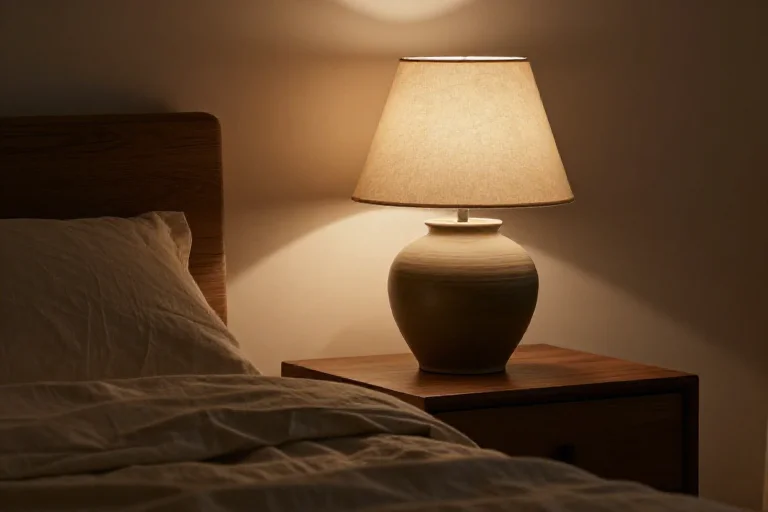
The easiest way to make a bedroom feel moody at night is often not changing the furniture.
It is changing the light.
A bedroom can have beautiful dark bedding, warm wood furniture, and rich colors, but a bright ceiling fixture can flatten the entire atmosphere in seconds.
Good ambient lighting works differently. Instead of making the entire room equally bright, it creates a few warm areas of illumination and lets the rest of the bedroom stay softer.
That is what creates the cozy nighttime effect people often associate with dark moody bedrooms.
Why Lighting Matters So Much in a Moody Bedroom
During the day, bedroom design is mostly about color, furniture, textiles, and natural light.
At night, lighting becomes the visual structure.
A bright overhead fixture removes much of the contrast between objects. Everything becomes equally visible.
A layered lighting setup does the opposite.
It creates:
brightest area → reading or bedside zone
medium light → surrounding furniture
lowest light → corners and background
This variation creates depth.
The room feels more intimate because your eyes are naturally drawn toward the illuminated areas instead of seeing the entire space at once.
Start With a Warm Bedside Lamp
The bedside lamp is usually the most important light in a moody bedroom.
It sits close to the bed, which means even a relatively small lamp can influence the entire feeling of the room.
Look for:
- warm light
- a soft diffuser or shade
- dimming capability
- a stable base
- a finish that works with the room
Ceramic, linen, matte metal, smoked glass, and aged brass can all work well.
The exact lamp style matters less than the quality and direction of the light.
A lamp with a harsh exposed bulb may technically be warm in color but still feel uncomfortable.
The goal is a soft glow.
Don't Try to Light Every Corner
This is one of the most useful principles for a dark bedroom.
You do not need equal illumination across the whole room.
A corner that remains relatively dark can actually make the illuminated parts of the bedroom feel warmer.
Think in terms of pools of light.
The bedside area is one pool.
A reading chair can be another.
A dresser or artwork can have a subtle third layer.
The areas between them can remain dimmer.
This creates visual rhythm.
Add a Reading Light Separately
A bedside lamp and a reading lamp have different jobs.
A bedside lamp establishes atmosphere.
A reading lamp provides focused task lighting.
When a bedroom contains a chair or reading nook, use an adjustable floor lamp or wall-mounted reading light so the light reaches the book without flooding the entire room.
The light should follow the activity.
That distinction makes the bedroom feel more sophisticated because each light source has a purpose instead of simply adding more brightness.
For a complete seating setup, see Bedroom Reading Corner Ideas.
Use the Color Temperature Carefully
A very cool white light can make even a beautifully decorated bedroom feel clinical.
For a cozy nighttime environment, warmer light is usually easier to work with.
The exact temperature depends on the bulb and fixture, but many warm bedroom setups fall around the warm-white range rather than neutral or cool white.
The important thing is consistency.
If one bedside lamp is very warm and another light source is noticeably cooler, the room can look visually fragmented.
A consistent warm palette feels more deliberate.
Use Light to Highlight Texture
Ambient lighting becomes especially effective when the room contains tactile surfaces.
Consider:
- linen bedding
- textured throws
- woven rugs
- natural wood
- matte ceramic
- aged metal
- softly folded curtains
These materials respond differently to low light.
A woven rug creates subtle shadows.
A textured duvet catches small highlights.
Brass or aged metal reflects a little more light than matte fabrics.
This is why a dark bedroom should not rely on color alone.
Texture gives the light something to interact with.
Create Contrast With One Reflective Element
Aged brass, antique gold, smoked glass, or a subtle mirror can help prevent the room from becoming visually flat.
But keep reflective elements limited.
You do not need a collection of metallic decor.
One brass lamp base or one framed mirror may be enough.
When the lamp turns on, that small reflective surface catches the light and becomes a quiet focal point.
That is much more effective than adding several shiny objects.
The Best Lighting Layout Is Usually Simple
A practical nighttime setup might look like this:
Bedside: warm table lamp
Reading corner: adjustable floor lamp
Dresser: optional small accent lamp
Ceiling: used only when brighter general light is needed
This is enough to completely change the room at night.
You can also use one floor lamp instead of a dresser lamp if you prefer a cleaner setup.
The objective is not to buy more lights.
It is to make each light source useful.
What to Avoid
Some lighting choices work against the moody bedroom aesthetic.
Avoid relying entirely on:
- very bright ceiling fixtures
- cool white bulbs
- exposed harsh bulbs
- RGB lighting
- multiple competing light colors
- overly decorative lamps that produce poor illumination
The problem is usually not that the light fixture is unattractive.
The problem is that it produces the wrong quality of light for the room.
A Simple Layered Lighting Formula
A useful formula is:
ambient + task + optional accent
Ambient lighting creates the overall mood.
Task lighting supports activities such as reading.
Accent lighting adds depth or highlights a particular object.
You can start with only the first two.
A warm bedside lamp plus a focused reading light is already enough to create a significant change.
See it put together
Moody Dusk Bedroom
An intimate space wrapped in richer tones and low-lit warmth, created for night owls and cozy evening unwinding.
Explore this scene →