How to Create a Dark Moody Bedroom Without Making It Feel Gloomy
September 5, 2026
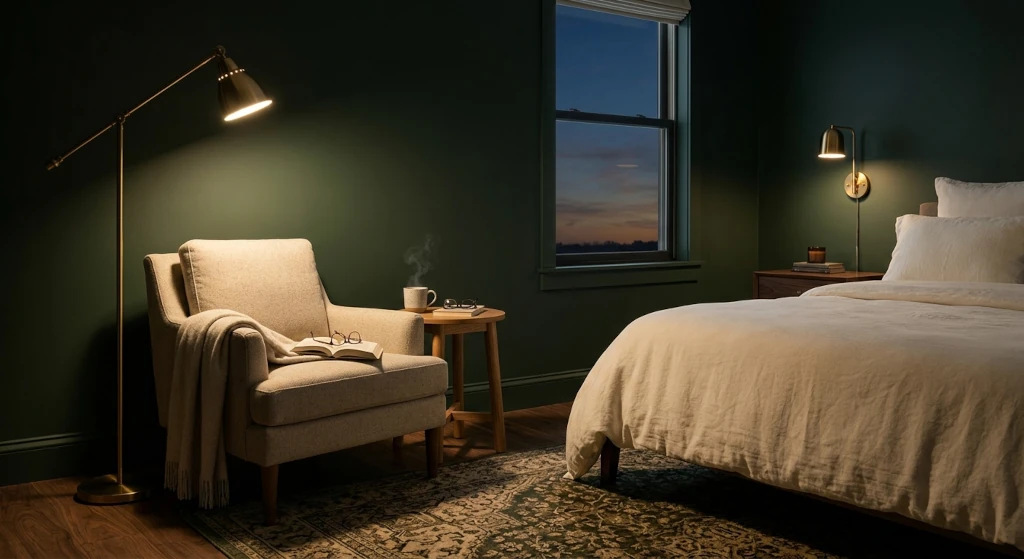
Dark bedrooms have a reputation for being difficult.
Will the room feel too small?
Will dark walls make it gloomy?
What happens if there is not enough natural light?
Those concerns are reasonable.
But a dark bedroom does not have to feel gloomy.
The difference is usually how the darkness is balanced.
A successful moody bedroom uses deep colors as the background for warm lighting, tactile materials, soft bedding, and carefully placed contrast.
That is what gives a dark room its intimacy.
Start with mood, not paint
Before choosing a dark wall color, decide what you actually want the bedroom to feel like.
Do you want:
- Romantic?
- Cocoon-like?
- Sophisticated?
- Dramatic?
- Warm?
- Quiet?
- Vintage?
- Modern?
“Dark” is not a style by itself.
It is a tool.
The best moody rooms use darkness to support a specific atmosphere.
Recent 2026 room-design discussions show strong interest in moody, dark, romantic bedrooms, with users asking how to combine deep colors with warm materials, rugs, wood furniture, and better lighting.
Deep colors do not mean pure black
You have many options:
- Deep brown
- Charcoal
- Burgundy
- Plum
- Forest green
- Deep olive
- Dark navy
- Warm charcoal
Dark brown and burgundy can create a particularly warm atmosphere.
Deep green can make a room feel natural and grounded.
Charcoal creates a more modern look.
Choose based on the mood you want.
Use warm materials against dark colors
This is where a moody bedroom becomes interesting.
Dark walls by themselves can feel flat.
Add materials with visible texture:
Wood
Linen
Velvet
Wool
Brass
Natural stone
The point is not luxury for its own sake.
Texture gives the eye something to discover.
A deep wall behind a smooth white bed is one thing.
A deep wall behind textured linen, warm wood, and a softly lit lamp is completely different.
Lighting is the most important part
A dark bedroom needs good lighting.
But “good” does not mean bright.
It means layered.
Try:
- Bedside lamps
- Wall lights
- Floor lamps
- Small accent lamps
- Dimmable lighting
Keep the strongest light away from the center of the ceiling when possible.
Let the room glow from different points.
This creates depth.
A moody bedroom should feel illuminated by atmosphere rather than flooded by light.
Add contrast
If everything is equally dark, the room can become visually flat.
Introduce lighter elements.
For example:
Dark wall
Cream bedding
Warm wood
Soft beige rug
Brass lamp
Now the darkness has something to contrast against.
You do not need to make the whole room pale.
Just give the eye somewhere to rest.
Use one bright or light-toned focal element
This could be:
- Bedding
- Artwork
- Curtains
- Rug
- Chair
- Headboard
A lighter focal element helps the darker palette feel intentional.
The room becomes layered instead of simply dark.
Try dark wood
Dark wood works especially well in a moody bedroom because it connects the color palette to natural material.
Walnut, smoked oak, or similarly rich finishes can create warmth without introducing another strong color.
The combination of deep walls + dark wood + warm light is particularly effective when you want the room to feel sophisticated rather than theatrical.
You do not have to paint everything
This is important for renters or anyone unsure about committing to a dark room.
Try introducing mood through:
- Dark bedding
- Large artwork
- Dark curtains
- A darker rug
- Wood furniture
- Warm lamps
You can create much of the same atmosphere without repainting the entire room.
A simple moody bedroom formula
Try:
Deep background
-
Warm light
-
Soft neutral bedding
-
Natural wood
-
One metallic accent
-
Textured floor layer
That gives you depth without making the room feel heavy.
Frequently asked questions
Do dark colors make a bedroom look smaller?
They can change the perception of space, but a dark room does not automatically feel cramped. Lighting, furniture scale, contrast, and visual clutter all matter.
What are the best colors for a moody bedroom?
Deep brown, charcoal, burgundy, plum, forest green, deep olive, and dark navy are common starting points.
How do I make a dark bedroom cozy instead of gloomy?
Use warm layered lighting, tactile materials, lighter bedding, natural wood, and deliberate contrast.
Can a moody bedroom still be minimalist?
Yes. A restrained palette with fewer carefully selected pieces can create an especially sophisticated moody bedroom.
Build the scene
Our Moody Dusk Bedroom is designed for the part of the day when everything slows down.
Deeper tones.
Warm ambient light.
Rich textures.
A little contrast.
Nothing overly bright.
Nothing unnecessarily busy.
Just a room that feels different once the sun goes down.
Explore the Moody Dusk Bedroom scene →
See it put together
Moody Dusk Bedroom
An intimate space wrapped in richer tones and low-lit warmth, created for night owls and cozy evening unwinding.
Explore this scene →