How to Refresh a Small Bedroom Without Remodeling
August 31, 2026
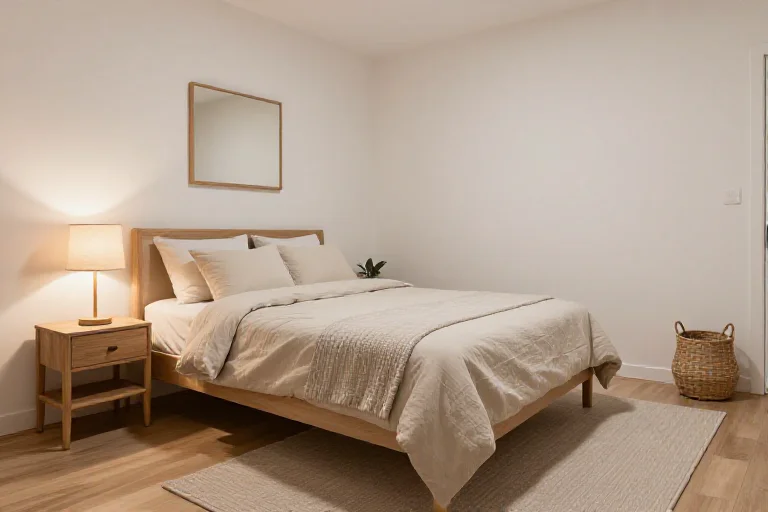
A small bedroom creates a frustrating design problem:
It can feel both empty and overcrowded at the same time.
There may be enough furniture to cover every practical need, but not enough visual breathing room to make the space feel comfortable.
That problem appeared repeatedly in recent room-design discussions. One 2026 Reddit user described a small bedroom with storage problems that made the room feel like a “shoebox,” while another described a room that somehow felt both empty and too small to add anything else.
The answer is usually not buying more furniture.
It is editing what is already there.
Start with the walking path
Before choosing new decor, look at the space between the major pieces.
Can you move comfortably from:
Door → bed → closet → window?
If the answer is no, decoration will not solve the problem.
Move furniture before buying anything.
Sometimes shifting a bed by only a few inches can make the room feel noticeably easier to use.
Keep the floor visually clear
A small room benefits from visual continuity.
Large furniture, floor baskets, chairs, storage boxes, and decorative objects can quickly break up the available floor area.
That makes the room feel smaller than it actually is.
Try to keep the main walking zone clear.
Then concentrate furniture along the edges.
The result is not simply “more space.”
It creates a clearer visual shape.
Choose fewer, better pieces
Small bedrooms punish unnecessary furniture.
A full dresser, large nightstand, accent chair, bench, storage rack, and multiple shelves may all be individually useful.
Together, they can overwhelm the room.
Ask of every large object:
Does this solve a problem I actually have?
If not, remove it.
Recent compact-bedroom discussions show that storage and function are often bigger concerns than decorative style. Users specifically look for hidden storage, under-bed solutions, and layouts that keep rooms usable without major renovation.
Use vertical space carefully
If floor space is limited, look upward.
Wall-mounted shelves, hooks, artwork, mirrors, and tall storage can use vertical space without taking as much floor area.
But there is an important distinction:
Vertical does not automatically mean better.
Too many open shelves filled with small objects can simply move visual clutter from the floor onto the walls.
Use vertical space selectively.
Make the bed the visual anchor
The bed is usually the largest object in the room.
Instead of trying to hide it, make it look intentional.
Keep the bedding simple.
Use one dominant color.
Add one texture layer.
Keep the area around the bed relatively quiet.
This gives the room a clear center.
Use a rug strategically
A rug can help visually connect the furniture rather than making the room feel disconnected into small pieces.
For a small bedroom, you do not necessarily need a huge rug.
The important thing is proportion.
A rug that is too small can make the room feel fragmented.
A simple neutral rug that extends beyond the bed can create a stronger visual zone.
Use mirrors carefully
Mirrors can increase the feeling of openness by reflecting light and extending visual depth.
But placement matters more than simply owning a large mirror.
Instead of pointing it toward a cluttered storage area, consider what the mirror will actually reflect.
A beautiful window, light wall, or open section of the room will usually create a better result.
Choose warm, light-reflective colors
A light room does not have to be pure white.
Warm white, cream, beige, oatmeal, pale taupe, and soft natural wood can keep a small room feeling open without becoming sterile.
For even more depth, add one darker accent instead of making every surface equally pale.
Contrast helps.
The five-change small bedroom refresh
You can create a noticeable change without remodeling by focusing on five areas:
1. Reposition the furniture
Improve the walking path.
2. Remove one unnecessary piece
Create visual breathing room.
3. Improve the bedding
Make the bed feel more intentional.
4. Add one soft floor layer
Use a rug to anchor the room.
5. Replace harsh lighting
A warm bedside or floor lamp can make the finished room feel dramatically more comfortable.
That is often enough.
What not to do
A common mistake is trying to solve a small room by adding small things.
Small room → small shelves → small baskets → small decor → more objects.
The room eventually contains dozens of things that individually seem harmless.
Collectively, they create visual noise.
Instead, think in terms of large decisions.
One good lamp.
One useful storage piece.
One rug.
One piece of artwork.
One comfortable bed.
The room gets simpler, not emptier.
Frequently asked questions
How can I make a small bedroom look bigger?
Clear the main walking path, reduce unnecessary furniture, use a cohesive color palette, and create visual continuity with rugs, bedding, and lighting.
What furniture should I avoid in a small bedroom?
Avoid furniture that solves no real problem or is disproportionately large for the room. Every large piece should have a clear function.
How can I make a small bedroom cozy?
Use texture rather than quantity. Warm bedding, a rug, warm lighting, and one or two personal details can create comfort without taking much space.
Should a small bedroom be minimalist?
Not necessarily. It should be edited. A small bedroom can still have character, but visible objects should have a reason to be there.
Build the scene
Our Small Bedroom Refresh scene is built around a simple idea:
You do not always need a renovation to make a bedroom feel different.
Sometimes the biggest transformation comes from a better layout, softer bedding, warmer light, and a few carefully chosen pieces.
Explore the Small Bedroom Refresh scene →
See it put together
Small Bedroom Refresh
A noticeable bedroom update built from a few high-impact changes instead of a full makeover.
Explore this scene →