Natural Bedroom
A warm bedroom layered with natural materials, earthy neutrals, and quiet organic textures.
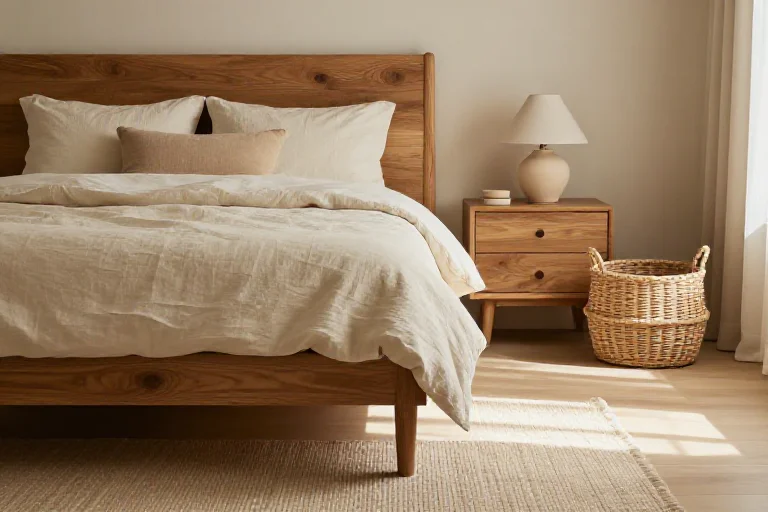
A natural bedroom doesn't need to look rustic.
The feeling usually comes from what the room is made of: linen instead of glossy fabric, warm wood instead of cold finishes, woven textures instead of perfectly smooth surfaces, and a small number of objects that show some natural irregularity.
The colors stay quiet. The materials do more of the talking.
What makes a bedroom feel natural?
Natural materials create variation without requiring visual clutter.
A linen duvet has a different surface from an oak nightstand. A woven basket breaks up a smooth wall. A ceramic lamp adds another tactile layer without adding another strong color.
The result feels warm because the room contains more material variation, not because every surface has been decorated.
Build the setup around these essentials
01 — Start with natural fabric
Linen or natural-texture bedding
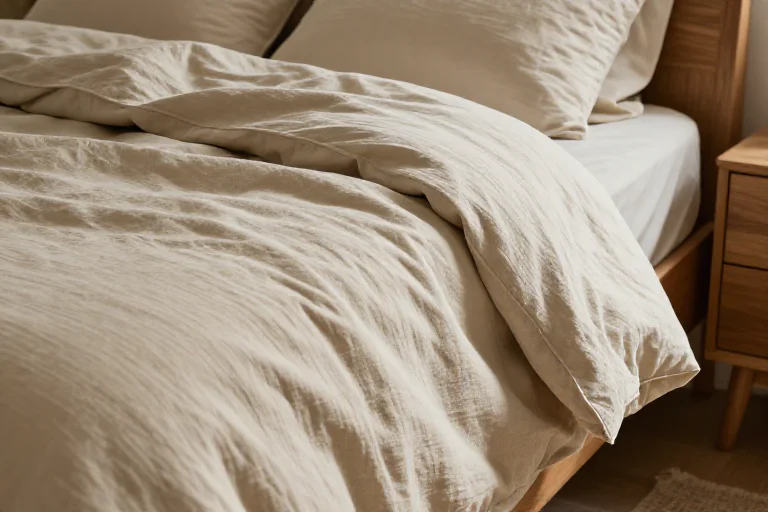
Linen bedding establishes the material foundation of a natural bedroom. Look for washed linen or a linen blend with visible natural wrinkles and a relaxed drape. Stick to cream, oatmeal, sand, and warm beige tones. Avoid high-gloss fabrics, bright white hotel styling, and busy patterns.
Washed Linen Duvet Cover
Washed linen · Natural texture · Warm neutral tones
Why it belongs here: Linen bedding establishes the material foundation of a natural bedroom.
Opens on Amazon in a new tab
02 — Add warm wood
A warm wood accent
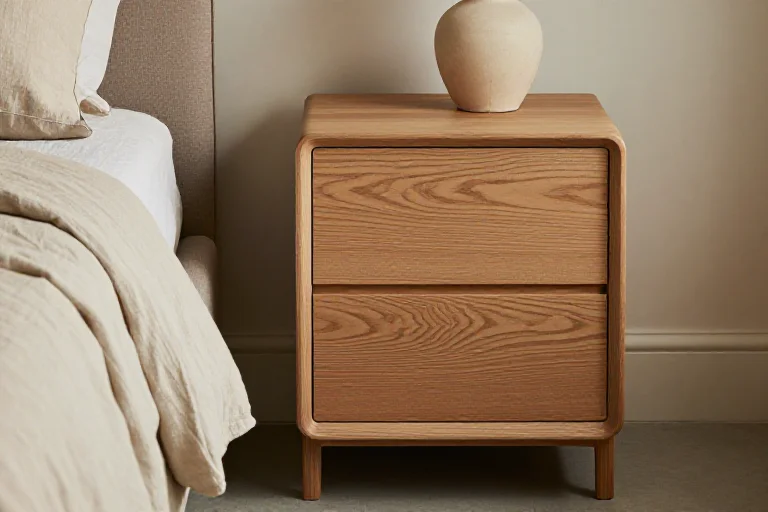
Wood brings natural warmth to a bedroom without adding visual clutter. A simple oak or walnut bedside table with visible grain and a matte finish is enough. Avoid high-gloss laminate, gray wood, white-painted wood, and ornate farmhouse styling.
Solid Oak or Walnut Bedside Table
Visible grain · Matte finish · Simple silhouette
Why it belongs here: Wood brings natural warmth to a bedroom without adding visual clutter.
Opens on Amazon in a new tab
03 — Add a woven layer
A woven texture element
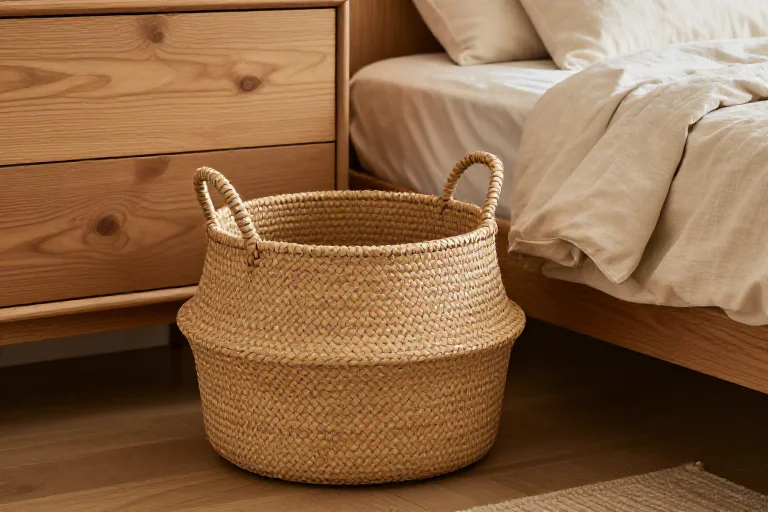
Woven materials like rattan, seagrass, or jute add organic variation without introducing another strong color. A handwoven basket placed naturally beside a dresser or under a console is often enough. Avoid bright synthetic colors, plastic imitations, and overly rustic farmhouse styling.
Handwoven Rattan or Seagrass Basket
Natural fiber · Handwoven · Warm beige tones
Why it belongs here: Woven materials add organic variation without introducing another strong color.
Opens on Amazon in a new tab
04 — Add one organic shape
A ceramic or organic accent
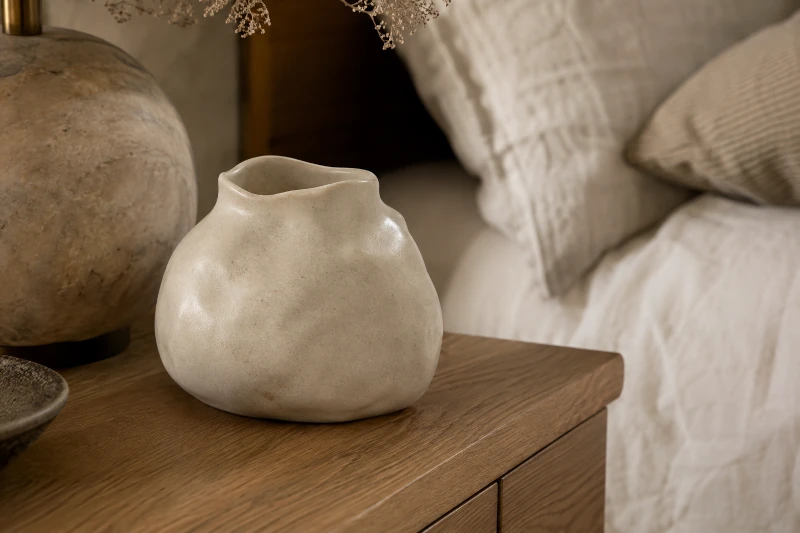
A handmade ceramic lamp or vase adds an organic shape without introducing visual clutter. Look for stoneware with an irregular organic form, matte finish, and warm neutral glaze in cream, sand, or terracotta.
Handmade Ceramic Vase or Table Lamp
Stoneware · Organic form · Matte glaze
Why it belongs here: This adds an organic shape without introducing visual clutter.
Opens on Amazon in a new tab
This setup works especially well if…
- ✓Bedrooms that feel artificial, flat, or cold.
- ✓People who want warmth through materials rather than decoration.
- ✓Rooms with too many smooth, synthetic surfaces.
- ✓Anyone who appreciates earth tones and natural textures.
- ✓Bedrooms where a subtle organic feel is more important than bold style.
You may want a different setup if…
- ✗People who prefer sleek, high-gloss modern interiors.
- ✗Bedrooms that already feature heavy rustic farmhouse styling.
- ✗Anyone looking for bright or saturated color palettes.
- ✗Rooms where every surface is already highly textured.
The finished natural bedroom
The finished room feels warm because of what it's made of, not because it's decorated.
Linen bedding establishes a natural fabric foundation. A warm wood accent brings organic grain into the room. A woven basket adds tactile variation. A ceramic accent introduces one organic shape.
The colors stay quiet — cream, sand, beige, and warm brown — while the materials do more of the talking.
This page contains affiliate links. We may earn a commission at no additional cost to you. See our affiliate disclosure.