Dark Moody Bedroom Ideas: How to Create a Cozy Bedroom at Night
August 24, 2026
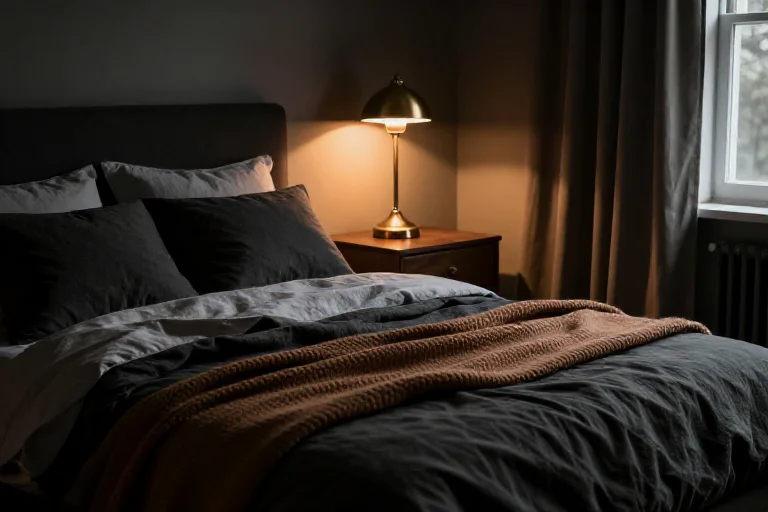
A dark bedroom does not have to feel gloomy.
When done well, a moody bedroom feels warmer, quieter, and more intimate after sunset. Instead of trying to make every surface dark, the better approach is to combine a few deeper tones with warm lighting, tactile fabrics, and small points of contrast.
The goal is not a black bedroom. It is a bedroom that becomes more inviting when the lights go down.
What Is a Dark Moody Bedroom?
A dark moody bedroom is an interior built around richer colors, lower lighting, and more visual depth.
Common elements include:
- charcoal or deep brown bedding
- warm ambient lighting
- dark olive, taupe, espresso, or muted burgundy accents
- textured fabrics
- warm wood
- aged brass or antique metal
- low-contrast rugs
- heavier curtains
- restrained decorative objects
The important part is balance.
A bedroom can use dark colors without becoming visually overwhelming. In fact, one of the easiest ways to create a moody bedroom is to keep most of the existing furniture and simply change the largest visual layers.
Start With the Bedding
The bed is usually the largest visible object in the bedroom, which makes bedding one of the highest-impact places to introduce a darker color.
You do not need black bedding.
Charcoal, espresso, deep taupe, muted olive, and warm brown can create the same sense of depth while remaining softer and more livable.
Look for fabrics with visible texture.
Washed cotton, linen blends, quilted surfaces, and relaxed woven fabrics tend to work better than perfectly smooth synthetic finishes because texture adds visual interest even when the color is relatively simple.
A useful formula is:
deep duvet + lighter sheets + textured throw + restrained pillows
This prevents the bed from becoming a single heavy block of color.
Use Warm Light Instead of More Decor
Lighting is arguably more important than the color of the walls.
A dark bedroom can look beautiful during the day and completely different at night. Once the overhead light comes on, much of that atmosphere disappears.
Instead, create small pools of warm light.
A bedside lamp is the most practical starting point. A floor lamp near a reading chair or a small accent light on a dresser can add another layer.
The key is that the whole bedroom does not need to be equally bright.
Think about the room in zones.
The bed can have one warm pool of light. A reading corner can have another. The rest of the room can remain relatively dim.
This creates depth.
For a deeper explanation of how to build this kind of lighting, see How to Create Cozy Ambient Lighting in a Dark Bedroom.
Add Richer Curtains
Window treatments are often overlooked when people redesign a bedroom.
But windows occupy a large amount of visual space, especially in a small room.
Floor-length curtains in charcoal, chocolate brown, muted olive, or warm taupe can make the room feel more enclosed and intentional.
They also help soften the transition between daylight and evening.
The goal is not to make the window disappear.
Instead, the curtains should frame it and contribute another layer of texture.
Matte fabrics generally work better for a moody bedroom than shiny materials because they absorb light and create a softer appearance.
Use a Rug to Prevent the Room From Feeling Too Hard
Dark furniture, dark bedding, and dark curtains can sometimes make a bedroom feel visually dense.
A rug introduces a softer horizontal layer.
Rather than adding another strong color, use a rug with subtle variation: faded charcoal, oatmeal, brown, taupe, or a low-contrast vintage pattern.
This gives the eye something to move across without competing with the bed.
A rug also makes the room feel more finished because it visually connects the bed and surrounding furniture to the floor.
Add One Warm Accent
Moody bedrooms benefit from small points of contrast.
Aged brass is particularly effective because it catches warm light without looking overly contemporary.
You do not need multiple brass objects.
One mirror frame, lamp base, picture frame, tray, or small decorative object may be enough.
The same principle applies to wood.
Warm oak, walnut, and darker natural wood can add character without introducing another strong color.
Avoid Making Everything Dark
This is one of the most common mistakes.
If every surface becomes charcoal, black, or dark brown, the room can lose contrast.
Instead, create a hierarchy.
For example:
Deep charcoal: bedding Warm taupe: curtains Natural wood: furniture Oatmeal: rug Warm brass: small accent Golden light: evening illumination
The room feels dark because several elements are darker than average, not because everything has been darkened.
A Simple Formula for a Cozy Dark Bedroom
A practical starting point is:
1 dark foundation + 1 warm lighting layer + 1 texture layer + 1 contrasting accent
For example:
- charcoal duvet
- warm bedside lamp
- textured neutral rug
- aged brass mirror
You can then add curtains or another textile layer if the room still feels visually incomplete.
This approach also makes the style easier to adapt. You can create a moody bedroom without replacing the bed, dresser, nightstands, or other expensive furniture.
The Finished Look
The best dark moody bedrooms do not feel like themed rooms.
They feel personal.
The furniture can remain familiar. The walls can stay relatively simple. The room only needs a few carefully chosen layers that become more noticeable once the sun goes down.
Deep bedding creates the foundation.
Warm lighting establishes the atmosphere.
Curtains and rugs introduce depth and texture.
One brass or antique-inspired accent gives the room a small point of contrast.
Together, these elements make the bedroom feel less like a brightly lit sleeping space and more like somewhere you actually want to spend the evening.
See it put together
Moody Dusk Bedroom
An intimate space wrapped in richer tones and low-lit warmth, created for night owls and cozy evening unwinding.
Explore this scene →